Jan 24. 26
How to Launch an Online Casino in 2026: From License to First Players
This mega guide will help you understand how to start an online casino step by step, what really drives success in 2026, and where most operators lose time, money, or control.
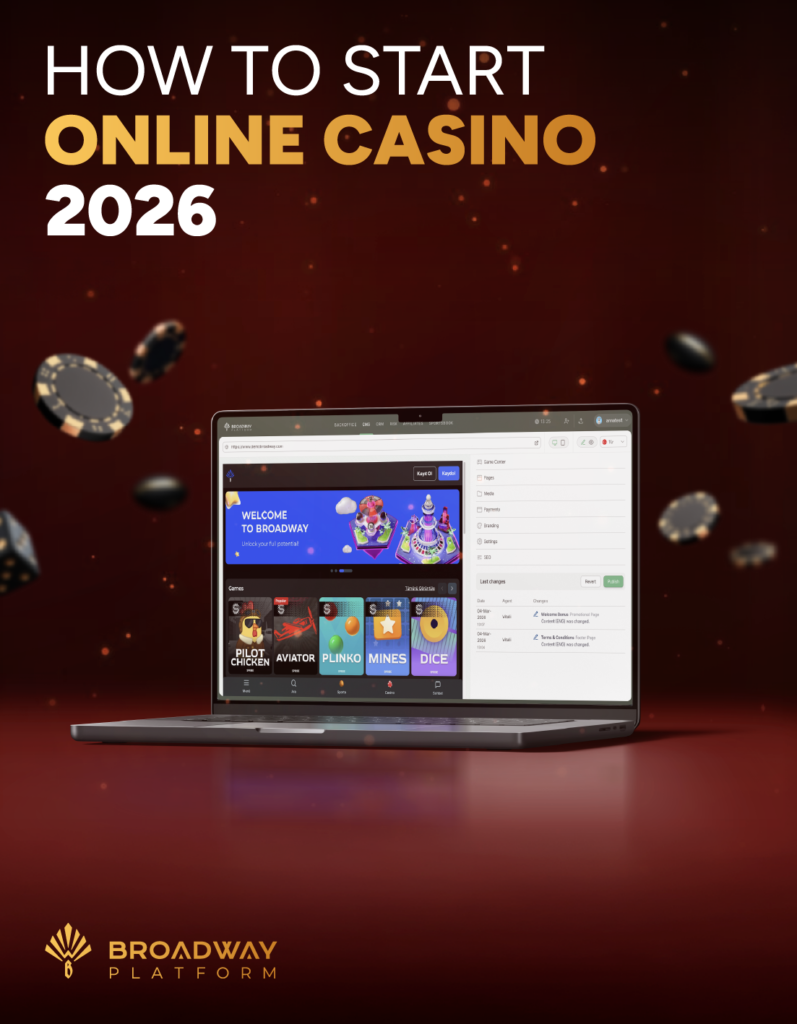
A Complete Mega Guide: From Licensing to Your First Players
Launching an online casino in 2026 is no longer about building technology from scratch or taking blind risks. It’s about making the right structural decisions early – licensing, platform architecture, payments, and player lifecycle – and choosing infrastructure that lets you launch fast without limiting future growth.
This mega guide will help you understand how to start an online casino step by step, what really drives success in 2026, and where most operators lose time, money, or control.
Why 2026 Is a Defining Moment for Online Casino Launches
The iGaming market didn’t become easier – it became more structured. The days of “trial and error” are over, replaced by a sophisticated ecosystem where execution is the primary competitive advantage.
What Changed Since the Early 2020s
- Licensing frameworks are clearer: Options like the Curaçao LOK, Anjouan, and various local regulated markets provide a transparent roadmap for entry.
- Platform technology is standardized: Solutions are now production-ready, removing the need for 12-month development cycles.
- Deep Integration: Payments and compliance are no longer “add-ons” but are deeply integrated into the software core.
- Higher Player Expectations: Users now demand instant payouts, mobile-first design, and personalized content.
In 2026, execution beats experimentation. The winners are operators who launch quickly, stay compliant, and scale without the need for re-platforming.
Step 0: Define Market, License, and Legal Reality First
Before choosing games, branding, or software, you must answer one critical question: Where will you operate? Your market choice is the foundation of your entire business model.
Market Realities by Region
- EU & Nordics
High-trust, highly regulated markets with strict compliance requirements and higher operational costs. Best suited for operators prioritizing long-term brand credibility and regulated market access. - Latin America & Southeast Asia
Rapidly expanding regions where success depends on deep localization, flexible payment methods, and fast adaptation to evolving regulatory frameworks. - India
One of the fastest-growing iGaming markets globally, driven by mobile-first users, high engagement, and strong demand for instant games, crash formats, and localized payment solutions. Platform flexibility and scalable infrastructure are critical here. - Africa
Mobile-first territories with high transaction volumes, where local wallets, low-latency performance, and lightweight UX play a decisive role in player acquisition and retention. - Crypto-First & Global Markets
Borderless, crypto-friendly audiences where speed, privacy, and instant payouts are key differentiators. Crypto casinos often operate across multiple regions simultaneously and require platforms that support hybrid payment models and flexible compliance logic.
Your market choice directly affects:
- License type and regulatory obligations
- Payment methods and payout expectations
- Game formats and content strategy
- CRM, retention, and scalability requirements
Choosing a platform that can support both fiat and crypto models, adapt to fast-growing markets like India, and scale across regions without re-platforming is no longer optional in 2026 – it’s foundational.
Licensing Options in 2026
Most new operators in 2026 typically choose between the following licensing paths:
- Fast-entry international licenses
(e.g., Anjouan)
Suitable for rapid market entry, early validation, and crypto-focused operations, with relatively fast timelines and lower upfront requirements. - Modernized global licenses
(e.g., Curaçao LOK)
A popular option for international operators seeking broader market access, improved regulatory structure, and compatibility with both fiat and crypto payment models. - MGA Malta + Local Regulated Licenses
(UK, EU member states, Ontario, selected LATAM jurisdictions)
Designed for operators targeting fully regulated markets, long-term brand credibility, and partnerships with tier-1 providers and payment institutions. These licenses come with stricter compliance obligations, higher operational costs, and longer approval timelines, but offer superior trust and market stability.
Licensing is no longer a standalone legal task. Your platform must already support the compliance logic of the license you choose – including KYC, AML, responsible gambling tools, reporting frameworks, and geo-blocking.
This is where a platform approach becomes critical. Platforms such as Broadway Platform Casino Suite are built around licensing and operational compliance requirements from the core, rather than treating regulation as an add-on to frontend delivery.
Step 1: The Real Cost of Launching an Online Casino in 2026
One of the biggest myths in iGaming is that launching a casino requires millions of dollars. While it isn’t “cheap,” the barrier to entry has become more manageable for smart startups.
Where the Budget Actually Goes
- Platform & infrastructure: Often bundled for efficiency.
- Licensing & legal: Ensuring a solid regulatory foundation.
- Payments setup & reserves: Crucial for liquidity and trust.
- Marketing & acquisition: The fuel for your growth engine.
- Retention & CRM: The key to long-term profitability.
Important: Most failed casinos didn’t fail because of technology – they failed because they underestimated payments, compliance, and acquisition costs.
Step 2: Choose a Build Strategy That Won’t Trap You Later
The technical foundation you choose today will determine your ability to scale tomorrow. You must avoid “technical debt” that forces a platform migration later.
| Approach | Time to Market | Control | Reality in 2026 |
| Custom build | 12+ months | Full | High risk, slow ROI |
| White label | 3–4 weeks | Very limited | Fast but restrictive |
| Turnkey platform | 4–8 weeks | High | Best balance |
Why Turnkey Platforms Dominate in 2026
White labels are fast but often limit branding, data ownership, and marketing logic. Custom builds offer control but introduce long delays and heavy operational risk.
The Broadway Platform follows a modular model, separating infrastructure from business logic. While core systems (RNG-certified games, payments, security) remain standardized and robust, the business layers (branding, bonuses, CRM) stay flexible. This allows operators to launch quickly while retaining full ownership and scalability.
Step 3: Build the Core Casino Offering (Content, Payments, Operations)
Your product is defined by what players can play and how easily they can move their money.
1. Game Content & Aggregation
Competitive casinos in 2026 launch with 2,000–10,000+ games. Modern casinos rely on game aggregation instead of individual integrations. Dedicated solutions like BroadHub centralize:
- Provider management and game analytics.
- Performance tracking and rapid content expansion.
- Access to Tier-1 slots, live dealer games, and “crash” formats.
2. Payments & Localization (Critical Success Factor)
Payments are one of the hardest operational challenges. Industry data shows that payouts processed in <24h result in 30–40% higher retention.
- Key requirements: Local methods (PIX, UPI), Crypto options, and clear withdrawal logic.
- Visibility: You need full BackOffice visibility to manage fraud and liquidity.
This is why many operators use a dedicated Payments Suite within the Broadway Platform to handle method diversity and scaling.
Step 4: Compliance, Risk & Responsible Gambling (Non-Negotiable)
Compliance failures are existential risks. In 2026, a platform must have “compliance-by-design.”
Mandatory Platform Capabilities:
- Automated KYC & AML checks.
- Responsible Gambling (RG) tools (limits, self-exclusion).
- Geo-blocking & IP detection to prevent illegal traffic.
- Full audit trails and GDPR-ready data handling.
Step 5: BackOffice, CRM & Automation (Where Profit Is Made)
Running a casino is an operational business where retention beats acquisition every time. Acquiring a new player costs 5–10× more than keeping an existing one.
CRM as a Profit Engine
High-performing operators rely on the Broadway Platform Unified BackOffice for:
- Real-time reporting: Seeing exactly what is happening on the floor.
- Player segmentation: Personalizing offers based on behavior.
- Broadway Platform CRM: Allowing for automated journeys, multi-channel communication, and behavior-based offers that can increase LTV by 40–60%.
Affiliate & Growth Management
Affiliate marketing remains a top acquisition channel. Using a dedicated Affiliate Tool (integrated with Broadway Platform) ensures transparent tracking, commission control, and scalable partnerships.
Step 6: Gamification & Player Engagement in the AI Search Era
In 2026, discovery happens via Google Search, AI assistants, and social communities. To stand out, you need engagement features that drive organic visibility.
Gamification tools within the Broadway Platform (tournaments, missions, leaderboards) increase session length and return frequency. These features aren’t just for fun; they create the “relevance signals” that AI search engines use to rank your brand higher.
Step 7: Managed Services & Operational Scaling
Many operators underestimate the sheer effort of 24/7 operations. Managed Services through the Broadway Platform help lean teams:
- Monitor payments and risk 24/7.
- Respond to technical incidents instantly.
- Focus on growth and strategy instead of daily “firefighting.”
What a Realistic Launch Timeline Looks Like
Using the Broadway Platform, an 8-week timeline is the industry standard:
- Weeks 1–2: Market analysis, license selection, and branding strategy.
- Weeks 3–4: Platform configuration, payment gateway setup, and content selection.
- Weeks 5–6: CRM integration, CMS setup, and end-to-end testing.
- Weeks 7–8: Soft launch, SEO indexing, and initial marketing campaigns.
Final Thoughts: Launching the Smart Way in 2026
Success in modern iGaming isn’t about reinventing technology; it’s about assembling the right building blocks. Winning operators:
- Choose scalable platforms.
- Treat payments and compliance as core strategies.
- Invest early in CRM and retention.
- Avoid unnecessary technical complexity.
The tools already exist. The frameworks are clearer than ever. What defines success now is how intelligently you put the pieces together.
Our Blog
Broadway Platform has officially obtained the Curaçao B2B License, marking an important step in strengthening the platform’s regulatory standing within the global iGaming ecosystem.
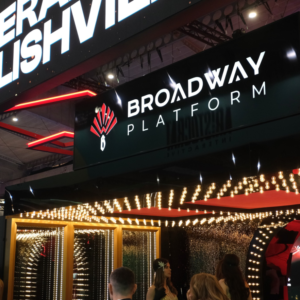
Broadway Platform kicked off 2025 with a strong presence at ICE Barcelona 2025, one of the most influential global iGaming exhibitions. Over three dynamic days, the team welcomed partners, operators, and industry professionals at Stand 2G24, presenting the platform’s latest developments and reinforcing its commitment to innovation and scalable technology. A Powerful Start to the […]
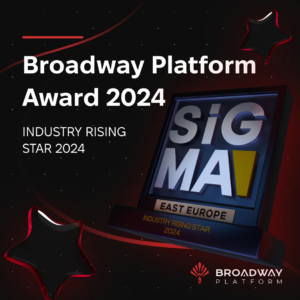
While 2024 has been a year of strong development, this award marks only the beginning of broader expansion plans. Broadway Platform continues to invest in